


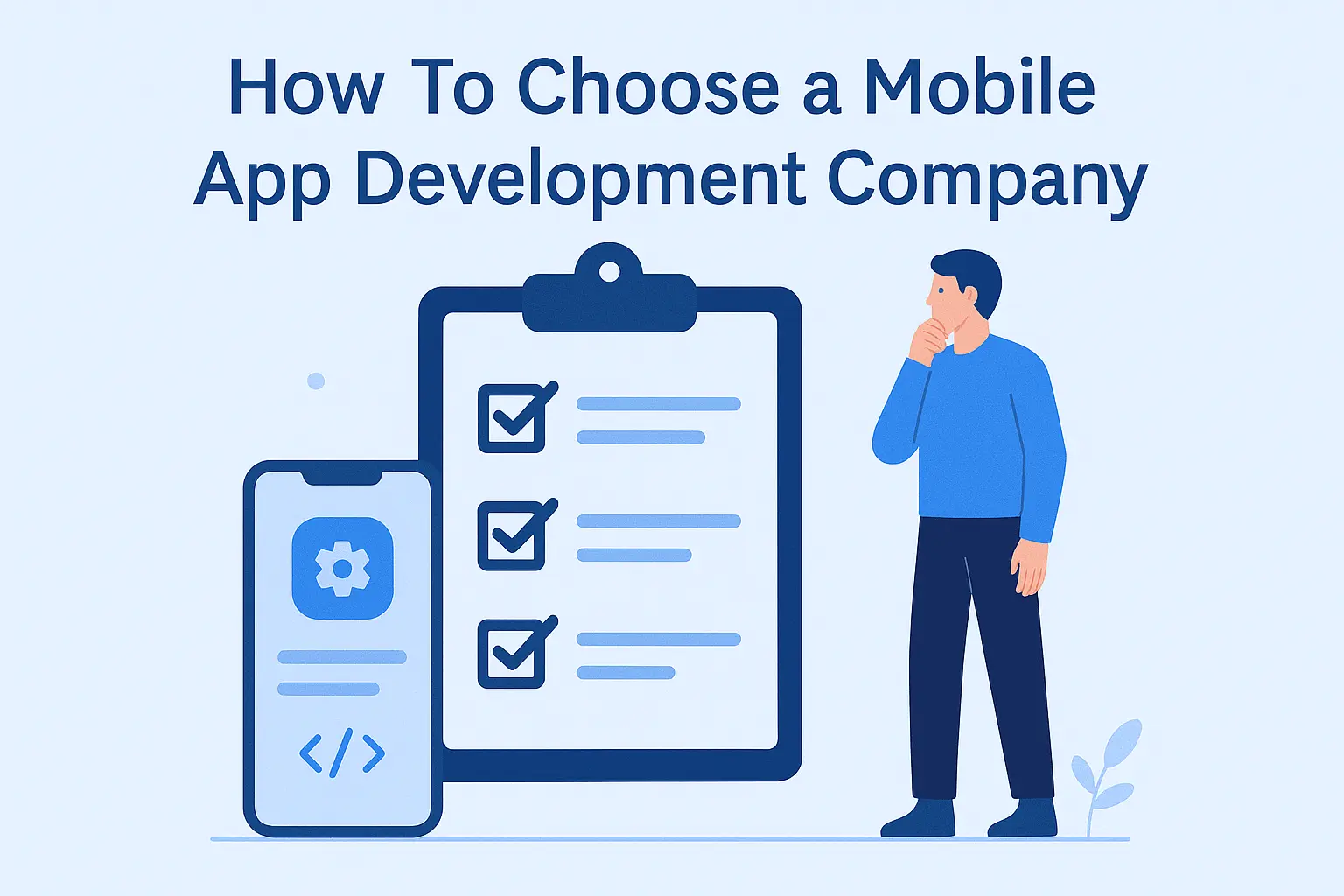
How To Choose A Mobile App Development Company
One of the most impactful decisions an organization or an entrepreneur can make in today’s digital world is choosing a mobile app development company that will help in building the vision into reality. Mobile phones have become an inseparable part of the lives of consumers. So naturally, mobile apps are the key to connecting with consumers for businesses in almost every industry. The global mobile app market is on a remarkable growth journey, and it is expected to exceed $756 billion by 2027, shedding light on not only increasing demand but also intense competition and ever-rising user expectations.
Even though the market is profitable, many organizations face hurdles when choosing a development partner. Some general risk factors include obscure project timelines, difficulty in assessing technical expertise, hidden pricing models, opaque portfolios, and risks related to communication breakdowns or inadequate post-launch support. These drawbacks may result in costly delays or unsatisfactory results. That’s why choosing the right mobile app development company becomes crucial. In the upcoming sections, we’ll explore how to make that decision wisely and how the 7C framework can be a reliable guide.
But before answering “How to choose a mobile app development company?” and unveiling the 7C framework, let’s first understand why picking any random agency can be risky and why the decision truly matters.
Why Choosing the Right Mobile App Development Company Matters
Choosing the right mobile app development firm matters because it is the foundation block for the success of your project. Missed deadlines, costly reworks, and final products that fail to meet user expectations or business targets can all be the results of selecting the wrong company. User trust and brand goodwill get hampered by poor development choices that often result in bugs, security issues, and high maintenance expenses. Moreover, profit opportunities and competitive advantage are reduced due to delays and low-quality products.
On the other hand, choosing the right development company improves expandability, user experience (UX), and return on investment (ROI). The app performs smoothly across devices and scales with your business demands when put in the safe hands of a skilled team. It also delivers a perceptive, user-friendly interface that attracts engagement and retention. This, in the long run, builds customer loyalty and maximizes the app’s monetary success.
Flutter Agency is one such company that takes a customer-first approach in mobile app development services. They own a track record of delivering scalable, safe, and user-friendly applications. Their commitment to transparent communication, adherence to best practices, and constant support guarantees clients receive not just an app but a sustainable digital asset that aligns with long-term business goals.
Now the question is, “How to choose the best mobile app development company?” Let’s break it down in steps to simplify the answer.
Step 1 – Define Your App Goals and Requirements
The first step in a mobile app development journey is defining your app goals and requirements. Begin by identifying your app’s core purpose, business objectives, the problem it solves, and the value it delivers to your target audience. A clear definition of your target market is vital. Determine who will use your app, what platforms they might prefer (iOS, Android, or hybrid), and how their needs shape your design and feature set.
Then you need to note down your essential features and functionalities in detail. Create a thorough list of core capabilities, prioritizing the ones important for your minimum viable product (MVP) and noting any additional features for future releases. Mention measurable KPIs such as user acquisition targets, engagement rates, or retention goals to track project success and guide development priorities. These expectations, along with a realistic timeline and budget estimate, need to be clearly specified before engaging a development partner.
Let’s understand this with an example. Before you contact a development service provider like Flutter Agency, outline your app’s unique value proposition, target platforms, user personas, and technical requirements, including integrations, security standards, and compliance needs. A well-documented project blueprint empowers your development team to deliver scalable, secure, and user-friendly apps aligned to your strategic goals.
Step 2 – Evaluate Company Experience and Industry Expertise
When evaluating a mobile app development company, it is essential to assess their experience and expertise in industries relevant to your project, such as fintech, healthcare, or e-commerce. Industry-specific expertise makes sure the company understands unique regulatory requirements, user expectations, and business challenges, thereby significantly accelerating development and improving app quality. Reviewing their portfolio and case studies provides insight into the complexity and variety of apps they have delivered, showcasing their ability to meet diverse client needs.
Client testimonials and reviews from credible platforms like Clutch and GoodFirms are strong indicators of reliability and professionalism. High ratings and positive feedback show continuous delivery and client satisfaction, helping you decide whether a company can be trusted with your project. You should pay close attention to companies with long-standing client relationships and repeat partnerships, because that reflects their commitment to quality and support.
Flutter Agency stands out with its intensive cross-industry experience, efficiently developing Flutter-based apps for startups and enterprises alike. Its command of scalable, secure, and user-friendly mobile solutions enables it to cater to a wide range of sectors, ensuring a customized approach that aligns with specific business targets and technology requirements. This makes Flutter Agency a dependable partner for clients seeking innovation along with proven industry knowledge.
Step 3 – Review Technical Expertise and Team Capabilities
Analyzing the technical expertise and team capabilities of a mobile app development company is a crucial step to ensuring project progress. Major reviews include the technology stack they use and the range of skills within their team. Popular tech stacks like Flutter, React Native, Kotlin, and Swift each have strengths. Flutter masters in delivering high-performance, visually consistent cross-platform apps through its unique rendering engine and single codebase. React Native is known for its large ecosystem and quick time-to-market, while Kotlin and Swift offer maximum performance and deep platform alliance for native Android and iOS apps, respectively.
Beyond technology, a company’s in-house team arrangement deeply affects the project’s quality and timeline. Ideally, your partner should have the best mobile app developers, skilled UI/UX designers, dedicated QA testers, and proficient project managers to ensure smooth coordination and high standards. These roles collectively help create a user-friendly, bug-free app that meets business targets.
Flutter Agency excels in custom mobile app development using the Flutter framework, improving its efficiency and cross-platform strengths. Their focus on Flutter ensures quick development cycles with consistent user experience across iOS and Android, backed by a united team that supports clients from concept to deployment and beyond.
Step 4 – Understand Their Process and Communication Style
Understanding a mobile app development company’s process and communication style is a prerequisite to ensuring a collaborative and transparent partnership. Two primary methodologies that can be used are Agile and Waterfall. Waterfall is a linear, sequential approach where each phase of planning, design, development, and testing is completed before the next begins. It offers clear timelines and deliverables but is rigid, making it difficult to adapt to changes once development starts. Agile, in contrast, is repetitive and highly collaborative, breaking the project into short sprints with constant stakeholder involvement. This approach allows for frequent updates, flexibility to core based on feedback, and early delivery of MVPs.
When deciding on a partner, remember to ask about their communication frequency, reporting methods, and transparency levels. Regular updates, clear reporting channels, and transparency about project status and pricing build trust and limit misunderstandings.
Talking about Flutter Agency, they use the Agile methodology with a client-first communication model. They conduct weekly sprints and provide demo updates to ensure clients stay informed and engaged throughout the development cycle. Transparent pricing and clear progress reports reinforce their dedication to partnership and project success, making them an ideal choice for clients seeking flexibility, clarity, and accountability.
Step 5 – Analyze Pricing Models and Contracts
When choosing the right app development company, understanding their pricing models is important to manage your budget and expectations. Common models include fixed-price, time-and-material, and dedicated-team approaches. Fixed-price contracts set a clear cost upfront based on agreed requirements and work well for projects with a well-defined scope, offering budget trust but limited flexibility. Time-and-material models charge based on actual hours worked and resources used, making them ideal for projects that require iterative development or potential scope changes. Dedicated team models provide skilled developers specially for your project, suitable for long-term, scalable development with stable resource commitment.
Beware of vague proposals with vague pricing or unrealistic, low quotes that may hide extra costs or compromise quality. Essential contractual elements include Non-Disclosure Agreements (NDAs) to protect your ideas, Service Level Agreements (SLAs) outlining performance and delivery standards, and clear intellectual property (IP) rights clauses to ensure you retain ownership of your app.
Flutter Agency promotes transparency through tailored engagement models that welcome various budgets and project complications. Their clear pricing structure and intricate contracts build trust, enabling clients to make informed decisions, reducing risk and ensuring alignment with project goals.
This step, combined with a clear understanding of your app goals, technical needs, and the app development process, empowers you to choose a partner that delivers value and success.
Step 6 – Check Client Reviews, Testimonials, and References
We discussed briefly above the importance of verifying client reviews and testimonials, as it is a pivotal step in choosing the right mobile app development company. You should use trusted third-party platforms like Clutch and Google Reviews to ensure authenticity. Genuine reviews typically give detailed feedback about the company’s communication, adherence to timelines, problem-solving skills, and overall quality of work. Be careful of generic or overly positive testimonials on company websites that lack specific project details.
Requesting reference calls or sample projects allows you to validate the company’s past performance directly. When speaking with past clients, ask about their experience regarding the development process, support, and whether the company met deadlines and expectations. This firsthand insight reveals potential red flags and increases confidence.
Flutter Agency’s client-centric approach is built on transparent communication and delivering measurable results. Their portfolio of satisfied clients and steady positive feedback on independent platforms reflect their reliability and professionalism, establishing them as a trustworthy partner for both startups and established enterprises seeking Flutter-based mobile app development.
Step 7 – Assess Post-Launch Support and Maintenance
The ongoing post-launch support is very important in maintaining your mobile app’s performance, security, and scalability over its lifecycle. Once an app is live, it requires regular monitoring to detect and fix bugs, updates to stay compatible with new operating system versions, and continuous updates to optimize the user experience. Without consistent maintenance, apps risk diminishing performance, security vulnerabilities, and falling user satisfaction, which can lead to loss of engagement and revenue losses.
Therefore, choosing a development partner that offers full-cycle services ensures your app remains robust and relevant long after launch. This includes timely feature updates, performance optimizations, security patches, and user feedback integration.
Flutter Agency follows this approach by providing ongoing support and optimization tailored to client needs, helping apps scale securely while also adapting to the evolving market demands. Their commitment to post-launch care ensures clients a sustainable and high-performing digital solution that grows with their business.
Red Flags to Watch Out For
Here are some key red flags to watch out for when evaluating a mobile app development partner:
- No NDA or vague contracts: If there is a lack of clear confidentiality or project scope documentation, it raises concerns about transparency and security.
- Unrealistic low pricing: Offers that seem too good to be true often hide hidden costs, compromised quality, or rushed work.
- Poor communication: Slow responses, vague updates, or inconsistent communication indicate potential project management issues.
- Lack of post-launch support: Absence of ongoing maintenance, updates, or security patches can lead to bad app performance.
- No portfolio or references: An inability or reluctance to share previous work or client references suggests inexperience or lack of credibility.
You should be vigilant about these warning signs, as they help prevent costly pitfalls, ensuring that the partnership aligns with your quality standards and project needs. Flutter Agency’s emphasis on transparent communication and comprehensive support minimizes these risks, reinforcing their reputation as a reliable partner.
Final Checklist – The 7C Framework for Evaluating Mobile Application Development Companies
Last but not least, let us take a look at the 7C Framework for Evaluating Mobile App Development Companies, which provides a comprehensive checklist to examine and compare potential partners effectively:
- Capability: Assess technical skills, team expertise, and ability to deliver scalable, secure, and user-friendly apps.
- Cost: Evaluate pricing models, transparency, and alignment with your budget and project scope.
- Communication: Consider responsiveness, clarity, update frequency, and transparency throughout the project.
- Culture: Look for alignment in values, work ethics, and client-first attitudes that foster collaboration.
- Case Studies: Review portfolios, client testimonials, and real-world results to verify experience.
- Compliance: Ensure adherence to legal, security, and industry-specific standards, including NDAs and IP rights.
- Continuity: Confirm ongoing support, maintenance, and feature updates to sustain app performance post-launch.
Using the 7C Framework as a vendor scoring sheet provides a proper approach to making an informed, balanced decision when choosing your ideal app development partner, minimizing risks and maximizing project success.
Conclusion
To summarize what we have discussed so far, finding the right mobile app development partner is essential to securing a strong return on investment and ensuring the longevity of your app in a highly competitive market. A well-chosen partner brings deep expertise, transparency, and reliability, driving not only the successful launch of your app but also ongoing value through continuous optimization, scalability, and robust post-launch support.
Flutter Agency, as seen, stands out as the trusted U.S. partner for custom mobile app development, renowned for its customer-first philosophy and specialization in the Flutter framework. We prefer transparency in pricing, agile communication, and comprehensive post-launch care, which makes Flutter Agency an ideal collaborator dedicated to turning your vision into a successful digital product.
To take the next step toward realizing your app’s full potential, start with a clear definition of your goals and requirements, then reach out to Flutter Agency to explore how their tailored services can fit your unique needs and budget. With mobile apps projected to generate billions globally in the upcoming years, now is the time to capitalize on this growth with a partner who can maximize your ROI through strategic development and ongoing support.


Read and share new topics about all things Tech.
Fill out the form below and we will be in touch soon!
"*" indicates required fields